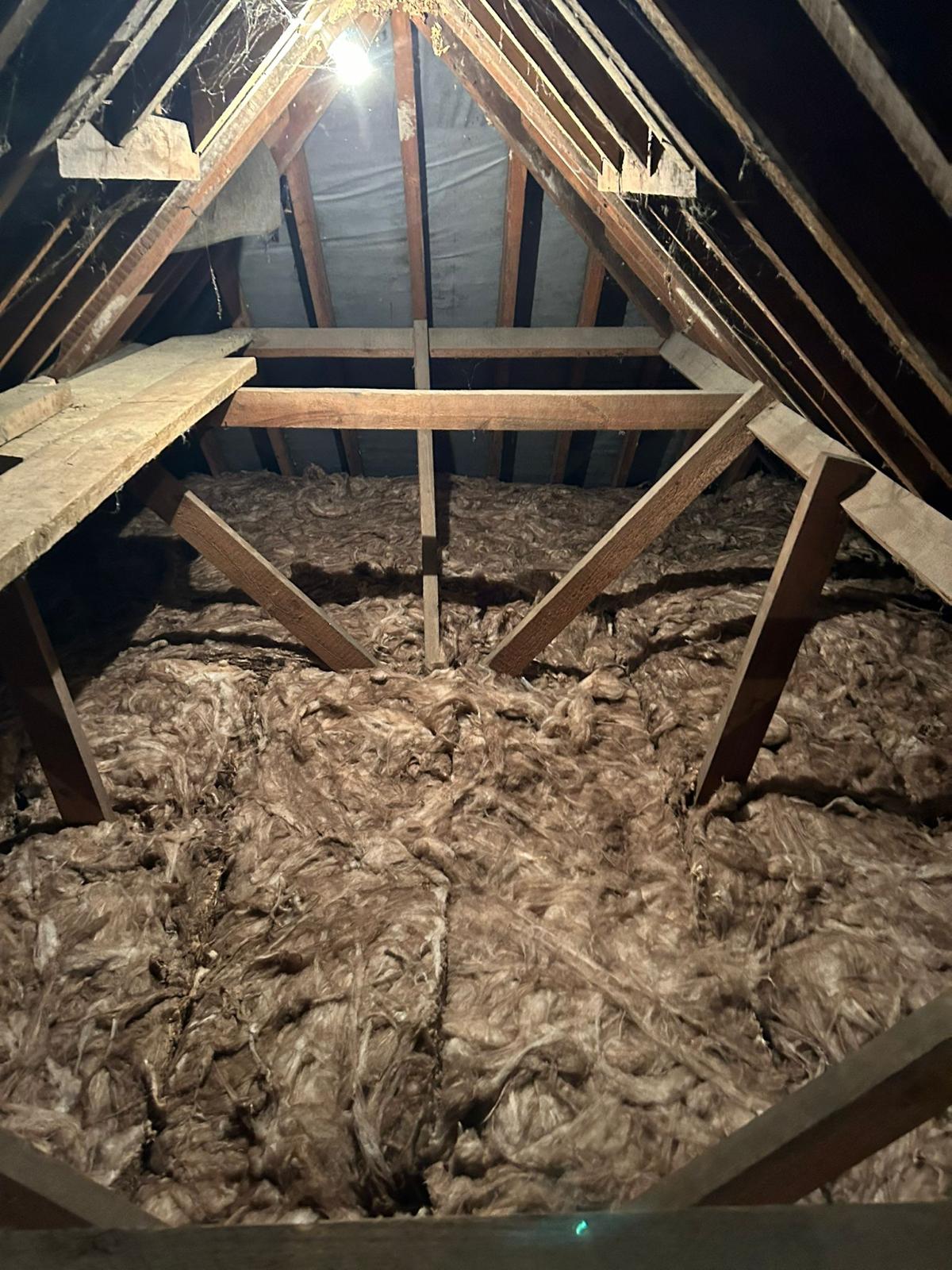
Many Steyning homes lose more heat through the roof than they need to. We top up or replace loft insulation to the recommended 270mm, installed carefully so ventilation and wiring are protected.
Is your loft insulation actually working?
Heat rises, and an under-insulated loft is one of the biggest sources of wasted heat in a typical home. Many lofts were insulated years ago with a single thin layer that barely covers the joists. For mineral wool, 270mm is the depth commonly recommended for UK lofts, and getting there makes a noticeable difference to how warm your home feels.
Installed properly, not just rolled out
- A first layer between the joists and a second layer laid across them, so there are no cold lines along the timbers.
- Eaves kept clear so air can move through the roof space and help prevent condensation.
- Electrical cables lifted on top of the insulation, not buried underneath it.
- Recessed downlights protected so insulation isn't packed against them.
- Loft hatch insulated and draught-proofed.
- Pipes and tanks lagged, with the area under a cold water tank left clear so it doesn't freeze.
Top-up or full replacement
If your existing insulation is dry and in reasonable condition, topping it up is usually the most cost-effective option. If it's damp, contaminated, badly compressed or crumbling, we remove it and start again. We'll tell you which applies at the survey.
Want to store things up there too? Pair it with raised loft boarding so the new insulation never gets squashed. More detail in our guide: how much loft insulation do I need?